




An Introduction to Fiber Optic Cables : A Complete Guide to Fiber Types, Standards, and Applications
Fiber optic cables and connectors are a critical part of modern communication networks. From data centers and enterprise networks to wireless infrastructure, DAS (Distributed Antenna Systems), and cellular base stations, fiber optics provide the high-speed connections needed to move large amounts of data quickly and reliably.
Understanding the basics of fiber optic technology, including fiber types, connector styles, and common industry standards, can help you select the right solution for your network and have more informed conversations with your customers.
In this guide, we will cover:
-
How fiber optic cables transmit data using light
-
The difference between single mode and multimode fiber
-
Common fiber standards including OM1, OM2, OM3, OM4, OM5, OS1, and OS2
-
How fiber core size impacts performance
-
Choosing the right fiber optic cable for your application
What Is Fiber Optic Cable and How Does It Work?
Fiber optic cable is a high-speed networking medium that uses pulses of light to transmit data instead of electrical signals. Unlike traditional copper cabling, which sends data using electrical pulses, fiber optic cable uses light generated by lasers or LEDs to carry information through extremely thin glass fibers.
At its simplest level:
-
Light on = 1
-
Light off = 0
These rapid pulses of light represent digital data and allow fiber optic networks to transmit information at extremely high speeds over long distances.
The Three Main Components of Fiber Optic Cable
A fiber optic cable consists of several layers designed to protect and guide the light signal.
1. Optical Core: The Pathway for Light
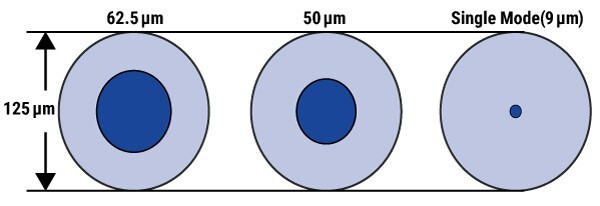
The center of a fiber optic cable is the core, a thin strand of glass that carries the light signal.
Because glass is highly reflective, light can travel through the core by continuously reflecting along the inside walls of the fiber. This process allows data signals to travel much farther than traditional copper cables without requiring electrical power along the cable itself.
Depending on the fiber type and equipment being used, fiber optic signals can travel many miles before requiring signal regeneration.
2. Cladding: Keeping the Light Contained
Surrounding the core is a layer called the cladding. The cladding has different optical properties than the core, allowing the light signal to remain inside the fiber as it travels.
Together, the core and cladding allow fiber optic cables to transmit data with minimal signal loss.
3. Protective Jacket: Shielding the Fiber
The outer jacket protects the delicate glass fibers from physical damage, moisture, and environmental conditions.
Fiber jackets are available in different constructions depending on whether the cable is designed for indoor, outdoor, direct burial, or high-density applications.
Understanding Fiber Core Sizes
The size of the fiber core plays an important role in how far a signal can travel and how much data it can carry.
Fiber core diameter is measured in microns (µm).
Common fiber core sizes include:
| Fiber Type | Core Size |
|---|---|
| Multimode Fiber | 50µm or 62.5µm |
| Single Mode Fiber | 8-9µm |
In general:
- Smaller cores allow light to travel farther with less signal distortion
- Larger cores allow more light to enter the fiber but are typically used for shorter distances
This difference is what separates the two primary categories of fiber optic cable: single mode and multimode fiber.
Single Mode vs Multimode Fiber: What Is the Difference?
The biggest difference between single mode and multimode fiber is how light travels through the cable.
Multimode Fiber (MM)
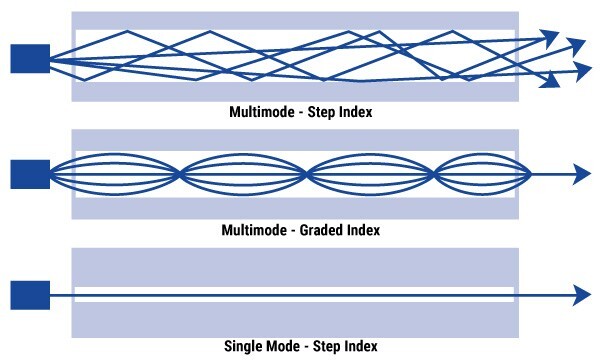
Multimode fiber allows multiple paths, or modes, of light to travel through the core at the same time.
Because multiple light paths can arrive at slightly different times, multimode fiber is typically used for shorter-distance applications where high bandwidth is needed.
Common applications include:
- Data centers
- Server rooms
- Enterprise networks
- Campus networks
Multimode fiber commonly uses LED or VCSEL light sources and supports high-speed connections over shorter distances.
Single Mode Fiber (SM)
Single mode fiber uses a much smaller core, allowing only one path of light to travel through the cable.
This reduces signal loss and allows data to travel significantly farther than multimode fiber.
Common applications include:
- Telecommunications networks
- Carrier networks
- Long-distance backbone connections
- Wireless backhaul
Single mode fiber typically uses laser-based light sources and is the preferred choice for long-distance and high-bandwidth applications.
What Are Fiber Optic Wavelengths?
Fiber optic networks transmit data using different wavelengths of light. Similar to how copper cables carry different radio frequencies, fiber cables use different light wavelengths to transmit signals.
A wavelength is measured in nanometers (nm).
Common fiber wavelengths include:
Multimode Fiber
- 850nm
- 1300nm
Single Mode Fiber
- 1310nm
- 1550nm
The equipment and fiber type determine which wavelength is used.
Multimode Fiber Types: OM1, OM2, OM3, OM4, and OM5 Explained
Multimode fiber is categorized using OM ratings, which define performance characteristics such as bandwidth and distance capability.
 |
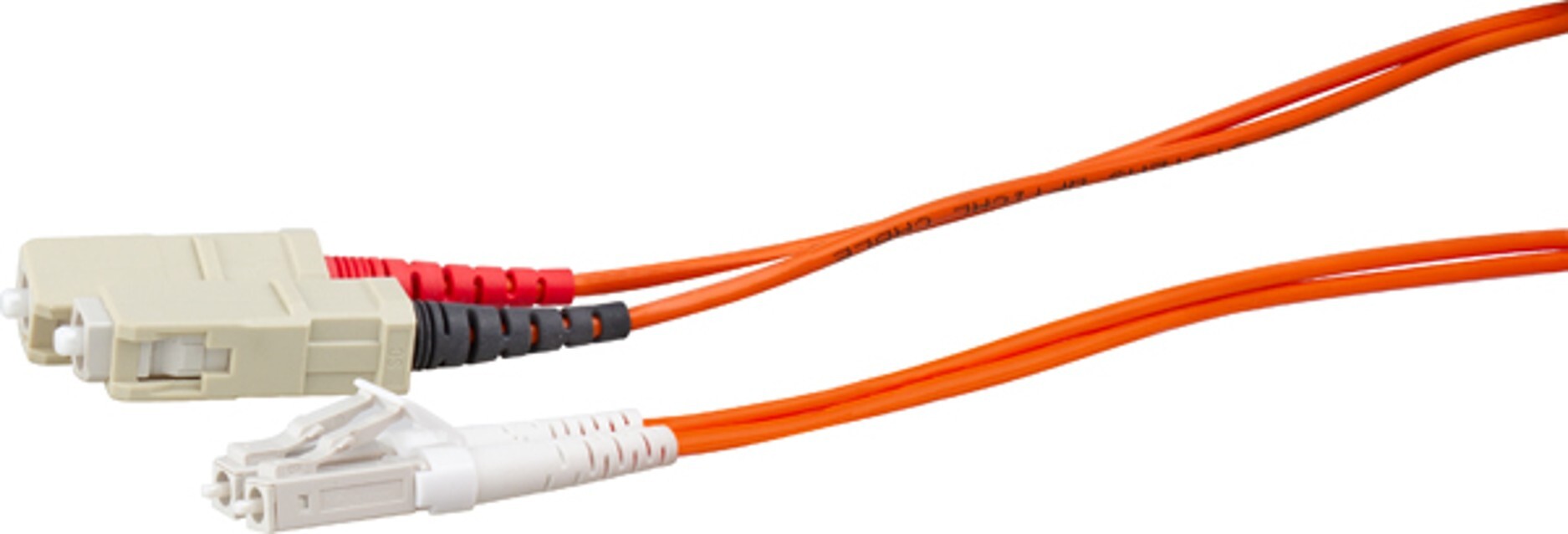
OM1 FiberCore Size: 62.5µm OM1 is an older multimode fiber standard commonly found in legacy installations. It is generally not recommended for new high-speed networks. |
 |
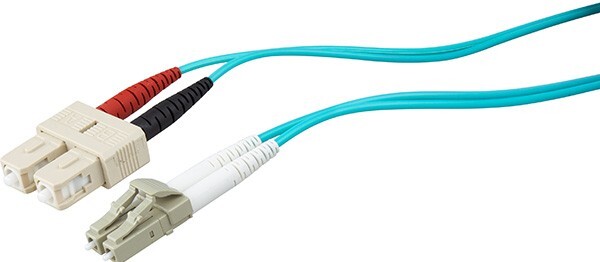
OM2 FiberCore Size: 50µm OM2 improved performance over OM1 but has largely been replaced by newer multimode fiber standards. |
 |
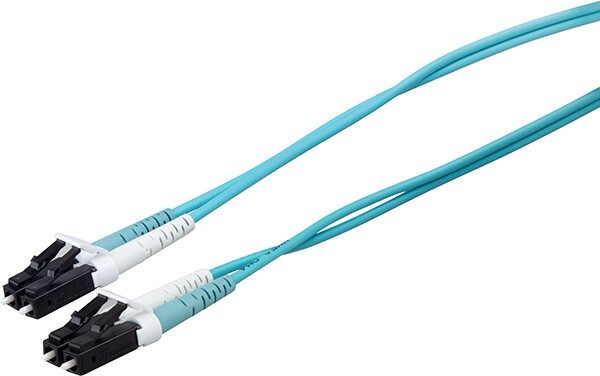
OM3 FiberCore Size: 50µm OM3 was designed to support higher-speed networking applications. Applications include:
|
 |
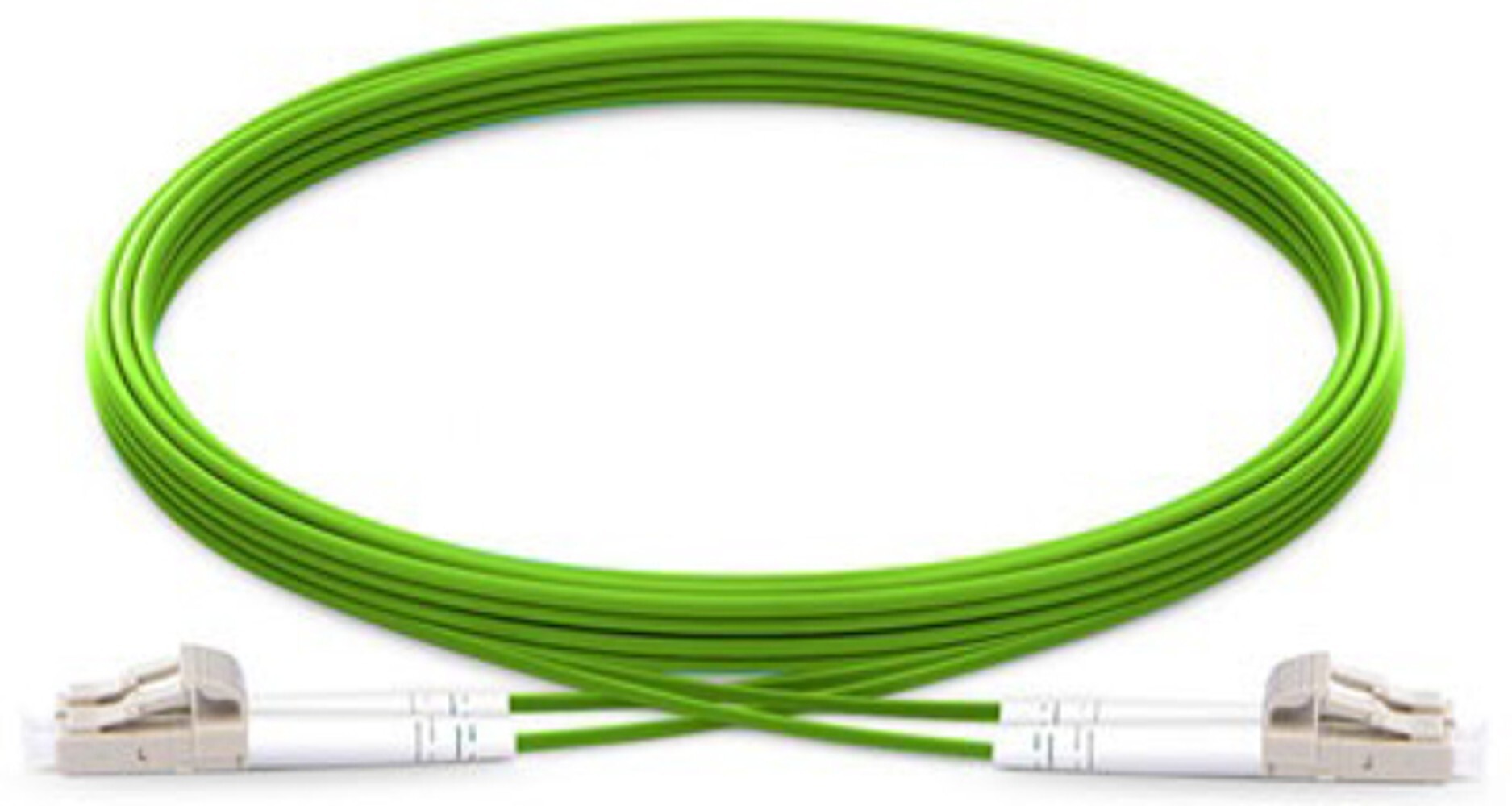
OM4 FiberCore Size: 50µm OM4 is one of the most common multimode fiber types used in modern data centers. It supports:
|
 |
OM5 FiberCore Size: 50µm OM5 is the newest multimode fiber standard and was designed to support short wavelength division multiplexing (SWDM). Benefits include:
OM5 is typically used in high-performance data center environments where future scalability is important. |
Single Mode Fiber Types: OS1 vs OS2
Single mode fiber is categorized using OS ratings.
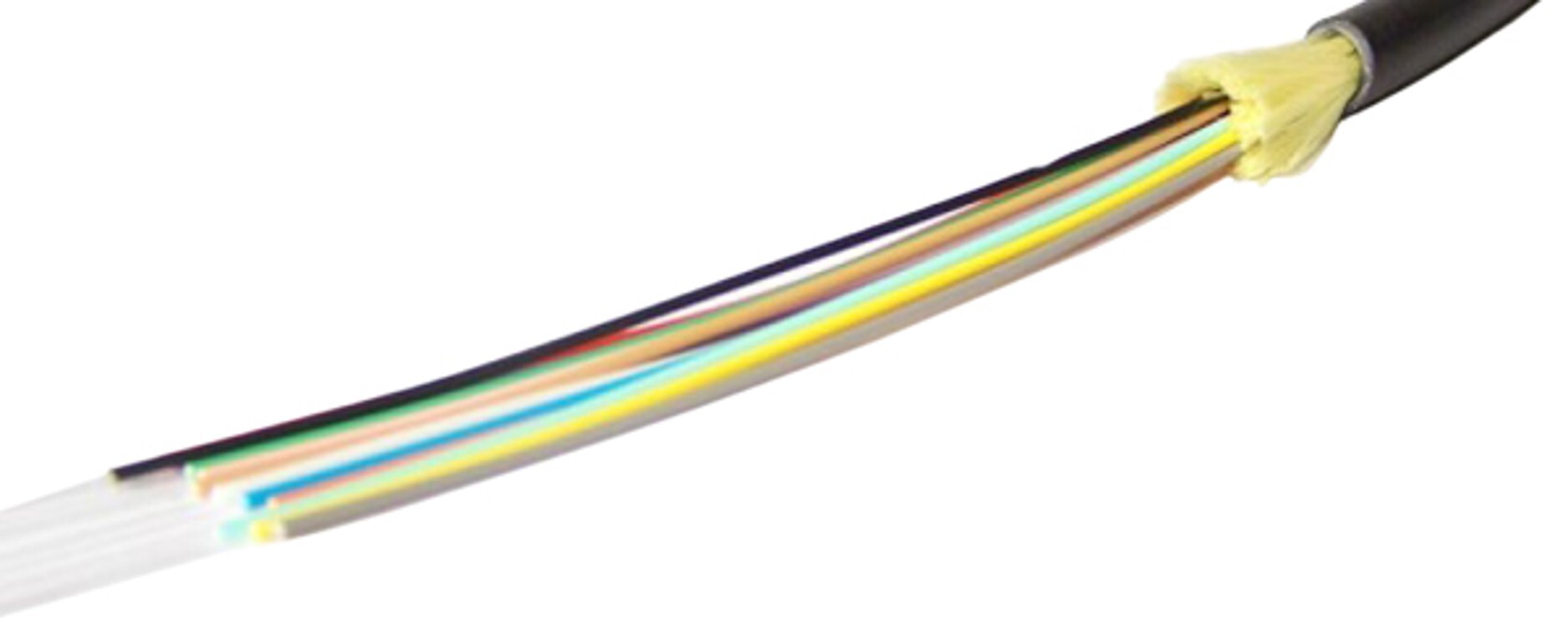 |
OS1 Single Mode FiberOS1 uses a tight-buffered construction and is typically designed for indoor applications. Common uses include:
OS1 is flexible, lightweight, and easier to install compared to loose tube designs. |
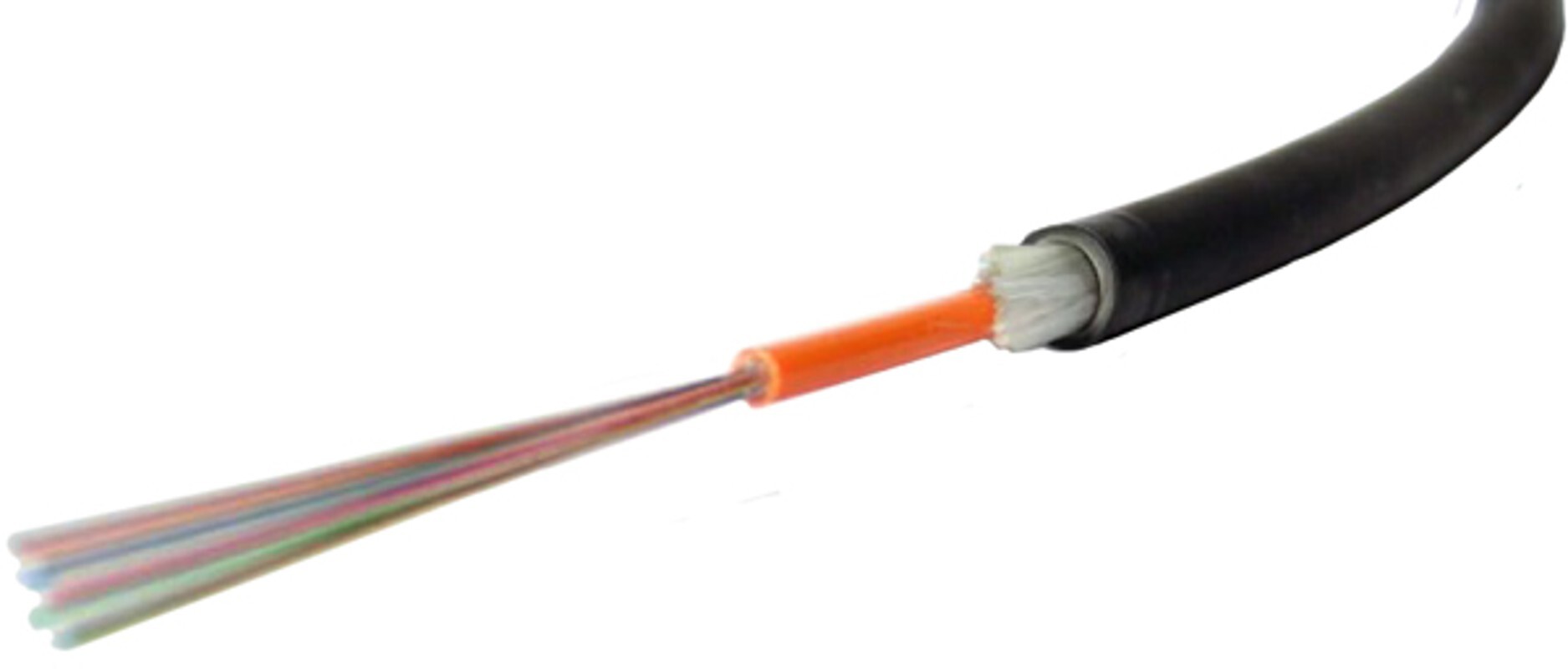 |
OS2 Single Mode FiberOS2 uses a loose tube construction and is designed for outdoor and long-distance applications. Common uses include:
OS2 provides lower signal loss and supports much longer distances than multimode fiber. |
Choosing the Right Fiber Optic Cable
Selecting the right fiber cable depends on several factors:
Distance
- Short distances: Multimode fiber is often preferred
- Long distances: Single mode fiber is typically required
Network Speed
Higher bandwidth applications may require newer fiber standards such as OM4, OM5, or OS2.
Environment
Consider whether the cable will be installed:
- Inside a data center
- Between buildings
- Outdoors
- Underground
- In high-density environments
Existing Infrastructure
When upgrading an existing network, compatibility with current fiber types, connectors, and transceivers is critical.
Final Thoughts: Understanding Fiber Makes Network Decisions Easier
Fiber optic technology can seem complex, but understanding the basics makes it much easier to choose the right cable and connector for any application.
Whether you are designing a data center, upgrading an enterprise network, or supporting wireless infrastructure, selecting the correct fiber type ensures better performance, reliability, and future scalability.